Comprehensive Speech & Feeding Therapy for Children
Speech Therapy
At Advanced Therapy Solutions, we help children overcome speech-language challenges by developing their essential communication and interpersonal skills. Located throughout Middle Tennessee our speech-language therapy center works with children and families throughout Clarksville and Pleasant View..
Our staff of speech pathologists and therapists strive to make treatment fun, interactive, and individualized for every child. We look forward to meeting you and your family!
- Speech sound disorders (articulation difficulties)
- Language delays and disorders
- Social communication challenges
- Stuttering and fluency issues
- Voice disorders
- Receptive and expressive language difficulties
Did you know?
- 8 to 9% of children have speech sound disorders.
- By first grade, 5% have noticeable speech disorders.
- Most children with articulation disorders have no other disabilities or causative factors.
- More than 3 million Americans stutter. The highest prevalence of stuttering is between the ages of 2 and 6 and fewer than 1% of adults stutter.
- About 7.5 million Americans have voice disorders
- Between 6 and 8 million people in the US have language disorders.
- Articulation, language and stuttering disorders and autism are 2 to 4 times more likely to occur in boys than in girls.
Source: NIDCD (National Institute on Deafness and Other Communication Disorders)
How Speech-Language Therapy Works
Speech-language therapy helps children with their production of sounds and develops their language and communication skills. Speech-language therapy can address:
- Fluency disorders: Stuttering, stoppages, & sound prolongations
- Articulation disorders: Difficulty making sounds & pronouncing words
- Receptive disorders: Difficulty processing & understanding language
- Expressive disorders: Limited vocabulary & difficulty putting words together
- Resonance/voice disorders: Problems with pitch, volume, & quality of voice
- Oral feeding problems: Drooling & problems with eating & swallowing
Speech-language therapy may also be beneficial to children with:
- Autism
- Hearing impairments
- Non-verbal communication problems:
- Body language, eye contact, facial expressions.
- Birth defects: Cleft palate/lip
- Traumatic brain injuries
- Cognitive & developmental delays
- Chronic hoarseness
Feeding Therapy
Feeding and mealtimes are a central role in daily life. When there is a disruption in feeding or a child’s ability to safely maintain adequate nutrition, it can cause a strain on the child and family.
By scheduling a feeding evaluation our therapists can examine your whole child to try and discover the root cause of their feeding challenges. We then develop an individualized therapy plan which takes all aspects of your child’s feeding issues into account.
Feeding therapy progresses a patient’s ability to eat foods of multiple textures and tastes. Treatment helps broaden the spectrum of foods that a child can eat and educates them on how to eat the food. A feeding therapist will also work on oral exercises with your child to strengthen and develop their facial muscles, lips, tongue, and jaw.
- Limited food variety or picky eating
- Difficulty chewing or swallowing
- Sensory aversions to textures, tastes, or smells
- Difficulty transitioning to age-appropriate foods
- Mealtime behavioral challenges
- Poor weight gain or nutritional concerns
- Accepting food and liquids safely to avoid choking and aspiration.
How Feeding Therapy Works
Feeding therapy helps children achieve long-term and healthy relationships with food.
Feeding and/or swallowing disorders can be classified by one or more of the following:
- Refusing age-appropriate or developmentally appropriate foods or liquids
- Picky eating or limited diet, which impacts nutritional intake
- Accepting a restricted variety or quantity of foods or liquids
- Avoiding or restricting one’s food intake (ARFID)
- Experiencing less than optimal growth
- Failing to master developmentally appropriate skills, including utensil use
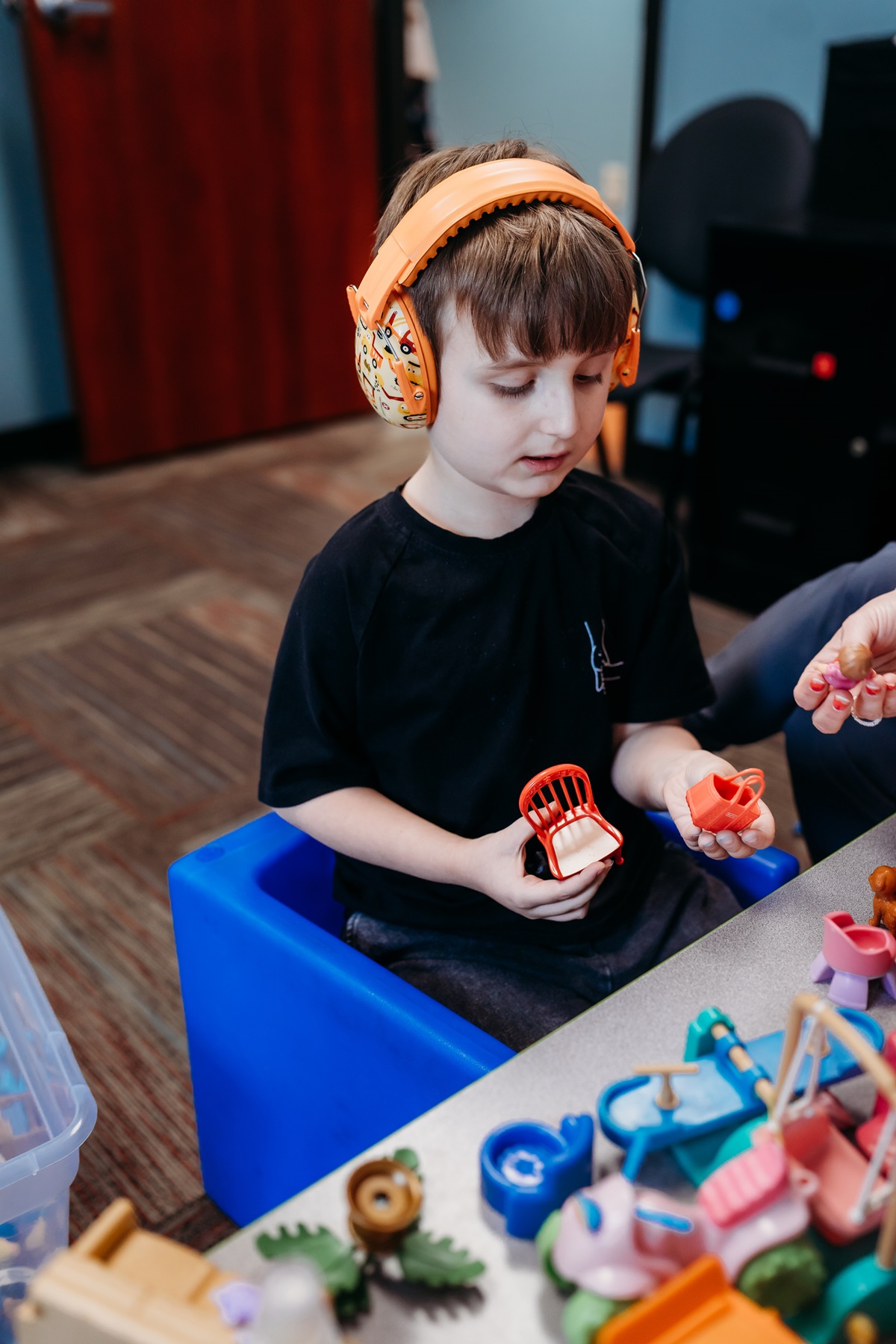
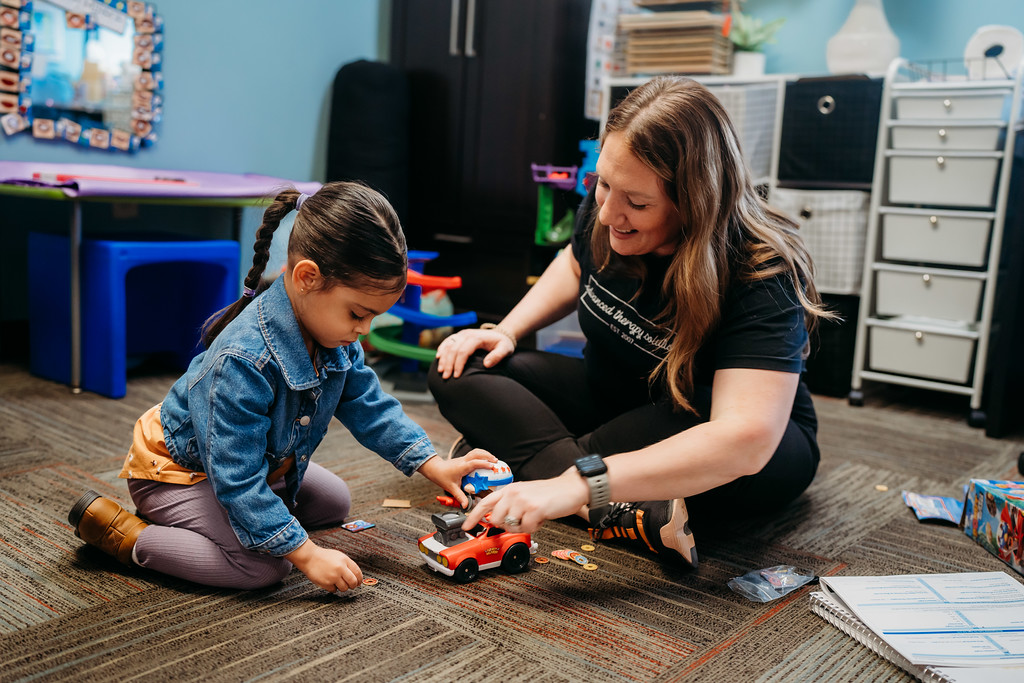
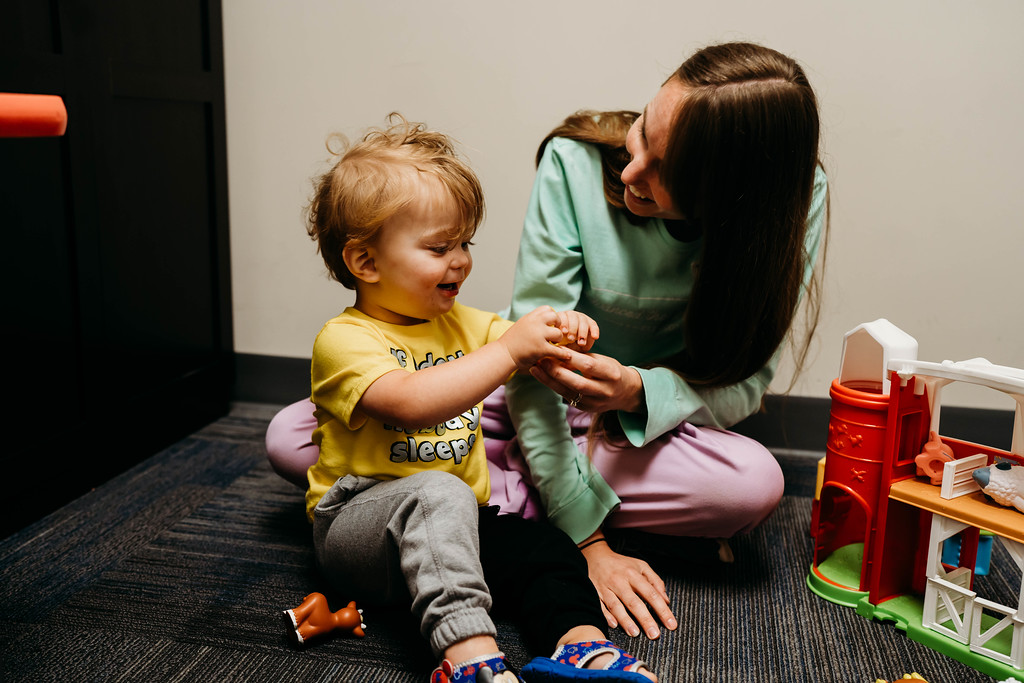
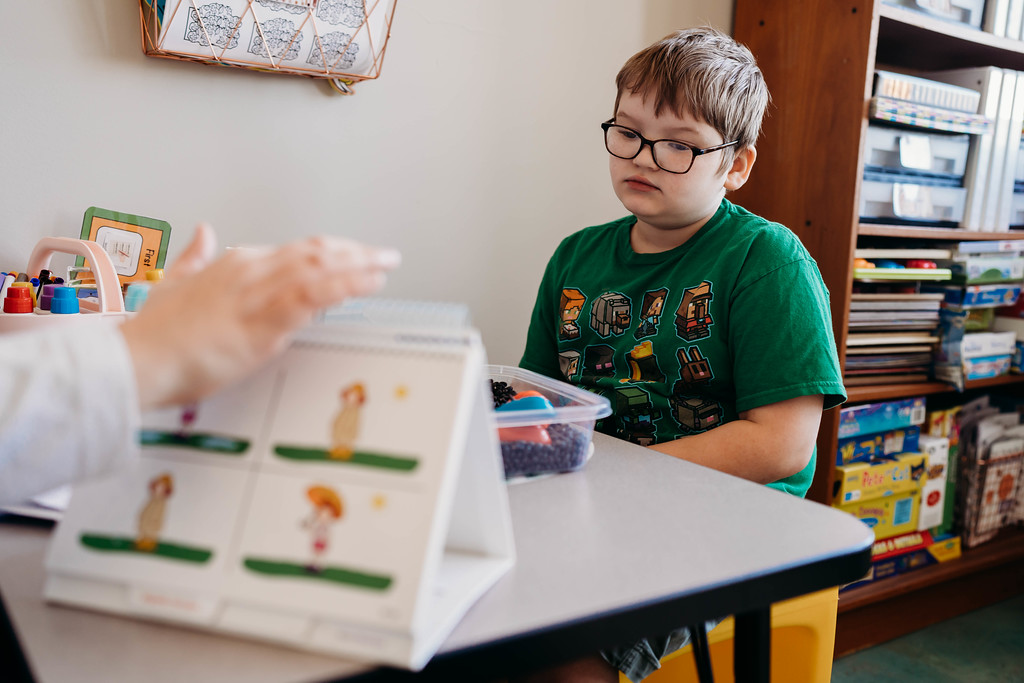
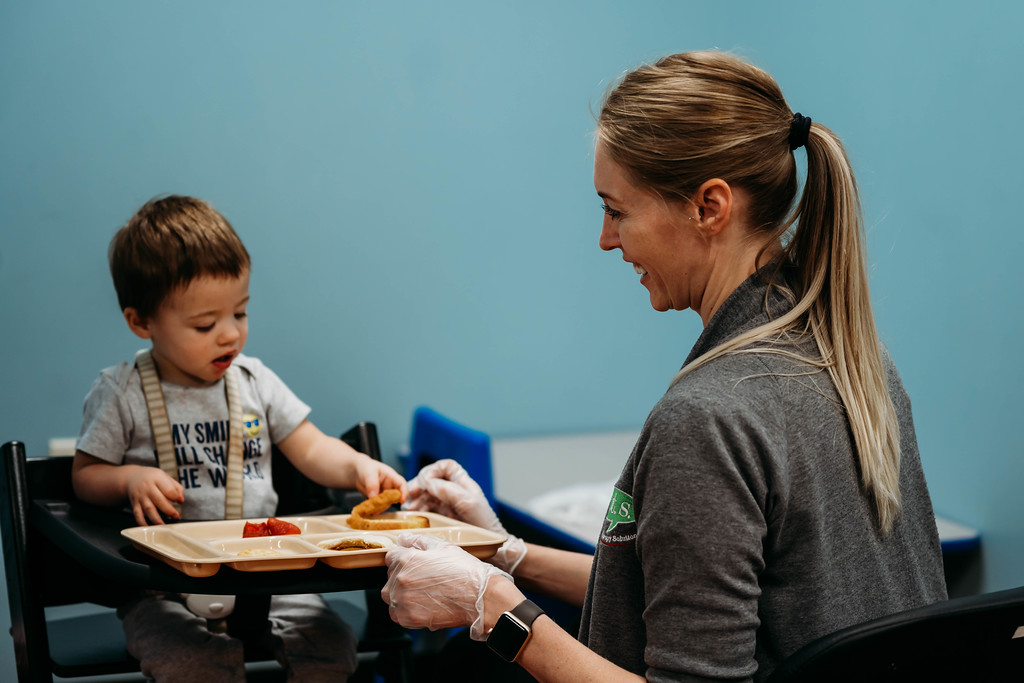
Speech Therapy & Feeding Therapy Photo Gallery
Speech Therapy & Feeding Therapy FAQs
If your child has difficulty speaking clearly, understanding language, or expressing their thoughts, it may be beneficial to seek an evaluation. Signs can include delayed speech, limited vocabulary, trouble following directions, or difficulty interacting with others.
If your child struggles with eating, chewing, swallowing, or accepting a variety of foods, feeding therapy may help. Common signs include picky eating, difficulty with certain textures, gagging, or challenges maintaining proper nutrition.
Children can benefit from therapy as early as infancy or toddlerhood. Early intervention is key—addressing challenges sooner can lead to better long-term outcomes in communication, nutrition, and overall development.
During the initial evaluation, our therapists assess your child’s communication or feeding skills, observe behaviors, and gather information about their medical and developmental history. Based on this, we create a personalized therapy plan tailored to your child’s needs.
Every child is different, so progress depends on their specific needs, consistency of therapy, and practice at home. Some children show improvements within a few weeks, while others may need ongoing support over several months.
Parents play a crucial role in their child’s progress. Our therapists provide simple, practical strategies you can use at home—such as practicing communication skills during daily routines or creating positive, stress-free mealtime experiences.